
When We Stand Together, We Discover What Is Possible
What happens when everything changes in a matter of seconds?
When a family suddenly needs food, medicine, clean water, or a safe place to stay?
When a community that was functioning yesterday wakes up facing circumstances it could never have prepared for?
In moments like these, it is easy to focus on everything that has been lost.
But over more than two decades of working with communities through The Wayuu Taya Foundation, I have learned something else:
Difficult moments also reveal what we are capable of when we stand together.
The earthquake in La Guaira, Venezuela, brought uncertainty and hardship to thousands of people. Families were displaced. Homes were damaged. Communities suddenly needed assistance on a scale that no single person or organization could provide alone.
But almost immediately, I began to see something powerful happening alongside the difficulty.
People showed up.
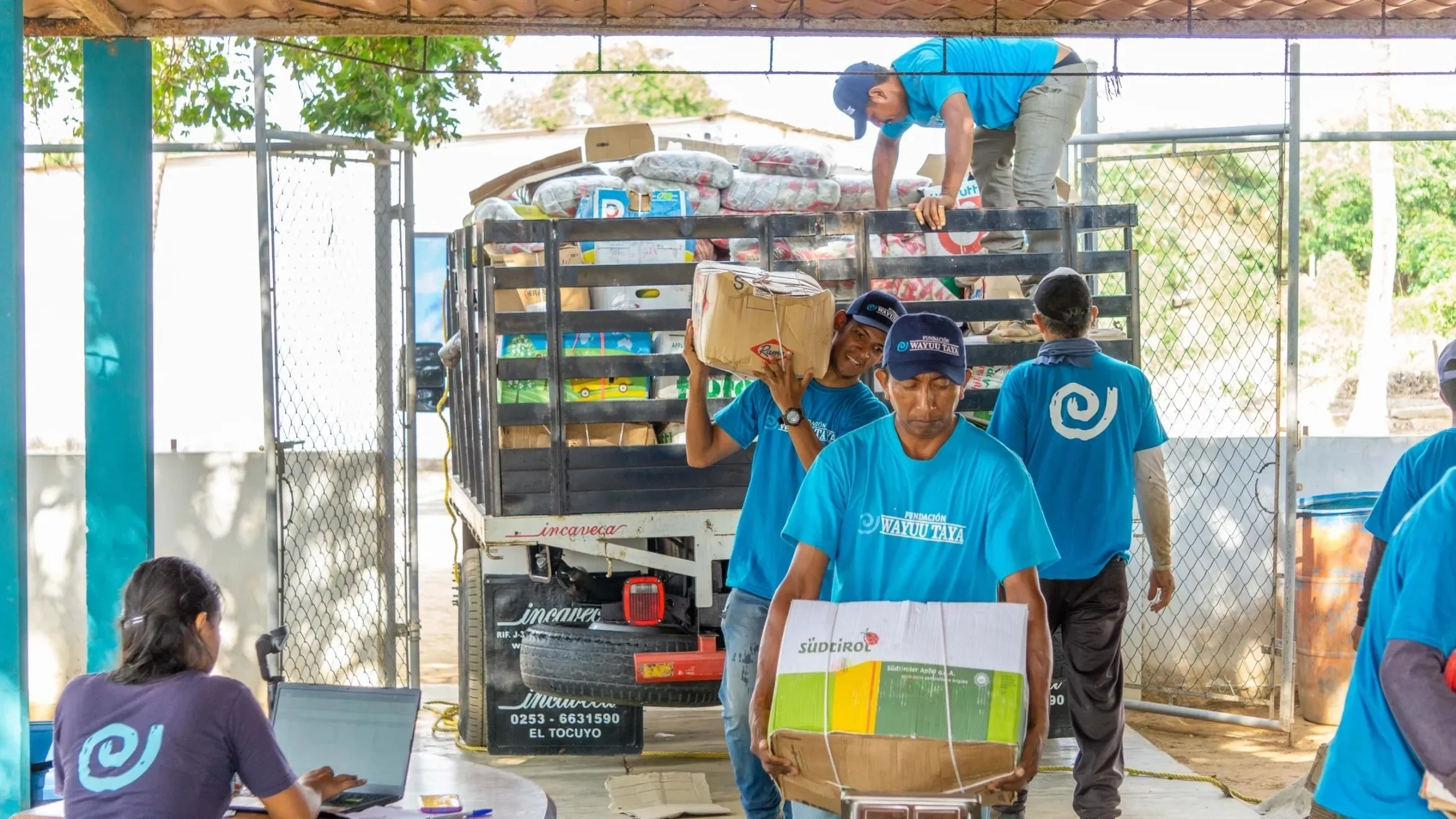
Organizations called and asked what was needed. Partners shared resources. Volunteers worked long hours. Food arrived. Medicine arrived. Water arrived. People who may never meet the families they were helping decided that those families mattered.
For me, this is the power of unity.
Unity Is Not a Feeling. It Is an Action.
We often talk about compassion as something we feel. But compassion becomes powerful when we do something with it.
A donation becomes medicine.
A partnership becomes food and essential supplies reaching a family.
A truck becomes a way to reach a community.
A volunteer giving a few hours becomes another pair of hands when those hands are desperately needed.
One action may feel small on its own. But when hundreds of people and organizations begin contributing what they can, those individual actions become something much bigger.
That is what I have witnessed through The Wayuu Taya Foundation.
And it has reminded me of something I have seen many times throughout my life:
You do not have to be able to solve the entire problem to become part of the solution.
None of Us Does This Alone
There can be a tendency, particularly in leadership, to believe that strength means having all the answers.
I don’t believe that anymore. Some of the most important work I have ever been part of has happened because people were willing to say:
I cannot do everything, but this is what I can do.
Someone has transportation.
Someone has medicine.
Someone has food.
Someone has funding.
Someone knows the community.
Someone knows how to solve a logistical problem.
Someone simply has the willingness to show up.
Leadership, especially during difficult moments, is not about being the person who can do everything.
It is about bringing people together around what needs to be done.
What La Guaira Reminded Me
I have spent many years doing this work, but there are still moments that stop me.
Seeing people who are already carrying their own responsibilities step forward to help someone else is one of them.
You witness generosity from places you did not expect. You see people solve problems because there is no time to debate whether something is possible. You watch strangers work side by side because, suddenly, what separates them matters much less than what connects them.
Those moments remind me why I started The Wayuu Taya Foundation in the first place. I have always believed that service begins with seeing another person’s dignity.
Not seeing a statistic.
Not seeing a problem.
Seeing a person.
A mother.
A child.
A grandfather.
A family whose life may look very different from yours but whose need for safety, dignity, hope, and opportunity is exactly the same.
What Does This Have to Do With You?
You may read this and think, But I don’t run a foundation. I am not responding to an earthquake. What does this have to do with my life?
Everything. Because unity is not only necessary after a natural disaster.
We need it in our families.
We need it in our workplaces.
We need it in our communities.
We need it when someone around us is struggling.
And we need it in leadership.
Every day, we have opportunities to decide whether we will remain on the sidelines or contribute something. It doesn’t always require money. Sometimes it is your time.
Your experience.
Your connections.
Your voice.
Your willingness to make a phone call.
Your ability to introduce two people who can solve a problem together.
Or simply your decision to ask someone:
What do you need, and how can I help?
Start With What You Have
The problems around us can feel enormous.
That feeling can convince us that because we cannot do everything, there is no point in doing anything.
I believe the opposite.
Start with what you have.
Do what you can.
Invite someone else to join you.
Then keep going.
I have watched that simple idea become food, medicine, clean water, education, and opportunity for people who needed it.
And I have watched it become something else too: hope.
Not hope as an abstract idea.
Hope created by knowing that someone showed up.
The Question I Keep Coming Back To
When something difficult happens, we can ask:
Why isn’t someone doing something?
Or we can ask:
What can I do?
That second question changes our relationship with the world.
It takes us from observers to participants.
And you don’t have to wait for a crisis to ask it.
Who around you needs support today?
What problem could become smaller if you contributed something?
Who could you bring together?
What do you have that could be useful to someone else?
You may be surprised by how much can begin with one small act.
Because when compassion becomes action, and individual actions come together, difficult moments can reveal something extraordinary:
We are capable of much more together than any of us can accomplish alone.
And perhaps that is one of the greatest forms of leadership there is.
If this resonates with you or your organization, let’s connect. I speak on leading through uncertainty, building trust in yourself and your team, and the quiet power of courage in leadership—the kind that doesn’t shout, but transforms.